

Revolutionary Era
Chapter 5: Independence 1775 ― 1784
Dissolving the Bands 1775-1776
The Great Revolution 1776-1782
Novus Ordo Seclorum 1782-1784


Join or Die 1763 ― 1775
More Perfect Union 1784 ― 1789
.png)
Documents
Master Index

07/24/1621
The Virginia Company issued the Ordinances for Virginia, a sweeping constitutional framework designed to formalize governance in the colony following years of instability, conflict, and administrative experimentation. The ordinances established a more structured system of local self-government in Virginia, refining the role of the governor and council while expanding mechanisms for colonial participation in lawmaking and marking a key step in the evolution of representative institutions in English America.
James I
Ordinances for Virginia
08/10/1622
James I of England issued the Grant of Maine, transferring large tracts of land in northern New England to Sir Ferdinando Gorges as part of England’s broader effort to expand and organize colonial settlement in North America following the early Virginia experiments. The grant aimed to expand permanent English colonization, establish proprietary governance, and counter French influence in the region, laying legal foundations for what would later become the Province of Maine.
James I
Grant of Maine 1622
11/06/1622
A royal proclamation aimed at regulating and restricting unauthorized commercial activity in New England, prohibiting “disorderly trading” by private merchants and unlicensed vessels. The order reflected English efforts to impose tighter imperial control over Atlantic trade, ensure that colonial ventures like Virginia and New England remained under sanctioned governance, and prevent economic disorder that could undermine royal revenue and colonial stability.
James I
Proclamation Prohibiting Disorderly Trading

05/13/1625
Issued by Charles I of England, it reaffirmed royal authority over the Virginia colony, emphasizing that it was now under direct Crown oversight as a royal colony, rather than under the control of the Virginia Company of London, whose charter had been revoked in 1624. The proclamation served to assert the king’s sovereignty, reassure colonists and investors of continued support, and reinforce governance through a Crown-appointed governor and council. It also underscored the strategic and economic importance of Virginia as a source of revenue and raw materials for the English crown.
Charles I
Proclamation on Virginia

11/05/1626
Representatives of the Dutch West India Company, led by Peter Minuit, acquired the island from local Lenape inhabitants. The transaction, often cited as costing goods valued at 60 guilders (roughly $24 in trade goods at the time), granted the Dutch legal claim to the island and the right to settle and develop it.
Netherlands
Dutch Purchase of Manhatten

03/18/1628
Granted by Charles I of England to the Massachusetts Bay Company, giving it authority to establish settlements, govern its territory, and conduct trade in what is now eastern Massachusetts. Unlike earlier colonial charters, this one allowed the company’s shareholders to govern the colony from New England itself, rather than from England, effectively giving the colonists significant self-governing powers. The charter provided for the creation of a colonial government with a governor, assistants, and a general court, while also guaranteeing liberties such as property rights and religious practice within the colony.
Charles I
Charter of Massachusetts Bay Colony 1628

06/07/1629
Issued by the Dutch West India Company it granted large estates, known as patroonships, to wealthy investors (patroons) who agreed to transport at least 50 settlers within four years, giving them extensive rights over land, local government, and economic activity. The charter created a semi-feudal system in the colony, where patroons held significant authority over tenants, including control of courts, rents, and labor arrangements. At the same time, it allowed some limited freedoms — such as private trade and religious tolerance — while ensuring the company retained overall sovereignty and commercial control.
Dutch West India Company
Charters of Freedoms and Exemptions

Biographies

James
Madison
James Madison (1751 – 1836) was an American statesman, political theorist, and Founding Father who played a central role in drafting and ratifying the United States Constitution, earning him the title “Father of the Constitution.” He co-authored the influential The Federalist Papers with Alexander Hamilton and John Jay, helped draft the Bill of Rights, and served as the fourth President of the United States from 1809 to 1817.

James
Monroe
James Monroe (1758 – 1831) was the fifth President of the United States, serving from 1817 to 1825, and was the last of the Founder-Presidents. A veteran of the Revolutionary War, he held numerous offices including senator, governor of Virginia, minister to France, and secretary of state and war under James Madison. His presidency is best known for the “Era of Good Feelings” and the Monroe Doctrine, which asserted U.S. opposition to further European colonization in the Americas.
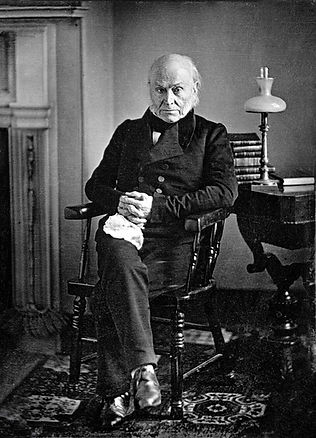
John
Q. Adams
John Quincy Adams (1767 – 1848) was the sixth President of the United States (1825–1829) and the son of second President John Adams. He was a highly educated diplomat who served as minister to multiple European powers and played a key role in negotiating the Treaty of Ghent, which ended the War of 1812. After his presidency, he served for nearly two decades in the House of Representatives, where he became a leading opponent of slavery and a defender of civil liberties.

Andrew
Jackson
Andrew Jackson (1767–1845) was an American soldier, lawyer, statesman, and the seventh president of the United States, serving from 1829 to 1837. Rising from humble origins on the Carolina frontier, he gained national fame as a military commander during the War of 1812, particularly for his victory at the Battle of New Orleans. As president, Jackson expanded popular participation in politics and championed the interests of the common voter, but his legacy remains controversial.