

World Wars Era
Chapter 17: World War I 1913 ― 1921
New Freedom 1913-1917
Over There! 1917-1921


New Nationalism 1897 ― 1913
Roaring Twenties 1921 ― 1929
World Wars Era Sponsors
In Grateful Recognition
"Patrons of the Past"
(Sponsoring all nine Eras)
Doug Shubert
Adam Shubert
Cathy Gillespie
.png)
Master Index
Documents

Proclamation for Suppressing Piracy
King George I
09/05/1717
King George I offered a royal pardon to pirates who surrendered by a fixed deadline while authorizing the Royal Navy and colonial governors to pursue and prosecute those who refused, marking a decisive imperial effort to crush Atlantic piracy and restore commercial order.

A Discourse Concerning Unlimited Submission and Non-Resistance to the Higher Powers
Jonathan Mayhew
12/31/1750
Biographies

James
Madison
James Madison (1751 – 1836) was an American statesman, political theorist, and Founding Father who played a central role in drafting and ratifying the United States Constitution, earning him the title “Father of the Constitution.” He co-authored the influential The Federalist Papers with Alexander Hamilton and John Jay, helped draft the Bill of Rights, and served as the fourth President of the United States from 1809 to 1817.

James
Monroe
James Monroe (1758 – 1831) was the fifth President of the United States, serving from 1817 to 1825, and was the last of the Founder-Presidents. A veteran of the Revolutionary War, he held numerous offices including senator, governor of Virginia, minister to France, and secretary of state and war under James Madison. His presidency is best known for the “Era of Good Feelings” and the Monroe Doctrine, which asserted U.S. opposition to further European colonization in the Americas.
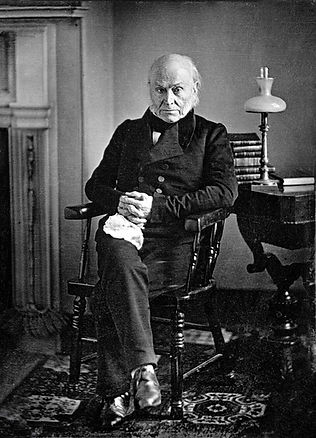
John
Q. Adams
John Quincy Adams (1767 – 1848) was the sixth President of the United States (1825–1829) and the son of second President John Adams. He was a highly educated diplomat who served as minister to multiple European powers and played a key role in negotiating the Treaty of Ghent, which ended the War of 1812. After his presidency, he served for nearly two decades in the House of Representatives, where he became a leading opponent of slavery and a defender of civil liberties.

Andrew
Jackson
Andrew Jackson (1767–1845) was an American soldier, lawyer, statesman, and the seventh president of the United States, serving from 1829 to 1837. Rising from humble origins on the Carolina frontier, he gained national fame as a military commander during the War of 1812, particularly for his victory at the Battle of New Orleans. As president, Jackson expanded popular participation in politics and championed the interests of the common voter, but his legacy remains controversial.